1099s & W-9s Explained for Shopify Sellers

If you’re a business owner, especially a Shopify seller or e-commerce brand, tax forms like Form 1099-NEC and Form W-9 can feel confusing and intimidating. Without clarity on what’s required from you and the correct process to follow year-round, many business owners are in a scramble to comply with the IRS filing deadline of January 31st and left feeling stressed out and frustrated.
Every year, when January rolls around, we hear the same question: “Wait… who am I supposed to send a 1099 to again?”
If you’re asking the same question, here’s our latest resource: 1099s & W9s Explained for Shopify Sellers. In this guide, we’ll break down:
What Form 1099-NEC is (and who actually needs one)
What Form W-9 does and why it matters
Common mistakes business owners make in their 1099 process
How to stay compliant without overcomplicating things
👉 Follow this link to grab your copy of Mavency’s FREE 1099 & W-9 Checklist for E-Commerce Sellers
What Is Form 1099-NEC?

Form 1099-NEC is an IRS informational tax form used to report non-employee compensation. Or, in other words, this form reports payments your business made to contractors or service providers who are not your employees.
What counts as non-employee compensation?
You report these payments in Box 1 of Form 1099-NEC.
According to the Internal Revenue Service, non-employee compensation includes:
Services performed by someone who is not your employee
Fees, commissions, prizes, or awards
Payments that include parts or materials as part of a service
If you paid $600 or more to a qualifying vendor during the year, that payment generally needs to be reported to the IRS.
Who Needs to Receive a 1099-NEC?
You’ll typically send a 1099-NEC to:
Sole proprietors
Single-member LLCs
Partnerships
LLCs taxed as partnerships
Attorneys (even if they are incorporated)
We’ll explain how to know a vendor’s entity type in a moment. First, let’s go over a few more factors involved in determining who needs to receive a 1099-NEC from your business.
How were they paid?
This matters more than most people realize.
You issue a 1099-NEC for payments made via:
Cash
Check
ACH
Wire transfer
Venmo personal accounts
You do not issue a 1099-NEC for payments made via:
Credit cards
Debit cards
Gift cards
PayPal
Stripe
Venmo business accounts
Why? Because those payments are handled by third-party payment networks.
What Are Third-Party Payment Networks?
Third-party payment processors (like PayPal, Stripe, and credit card processors) are responsible for issuing Form 1099-K, not you.

Current 1099-K reporting rule
Payments totaling $600 or more through a third-party network may trigger a 1099-K to the recipient.
That means:
You do not send a 1099-NEC for compensation paid through a third-party payment network.
The payment processor handles 1099-K reporting to the IRS.
This is a huge area where we see duplicate reporting mistakes — and it’s one of the biggest reasons clean bookkeeping matters.
What Is Form W-9 (and Why You Should Always Request One)
Form W-9 collects essential tax information from your vendors, including:
Legal name
Business name (if different)
Entity type
Address
Tax ID number (SSN or EIN)
Best practice (especially for e-commerce brands):
👉 Request a W-9 from every vendor before you pay them. This form should be completed by your vendor at the same time you are signing contracts or as soon as they send their first invoice for payment.
At a minimum, you should always collect W-9s from:
Contractors
Freelancers
Consultants
Attorneys and Law Firms
Other Service providers
This protects you when it’s time to issue 1099s — and avoids scrambling to comply with IRS requirements each January.
How to Read a W-9 to Know If a Vendor needs a 1099
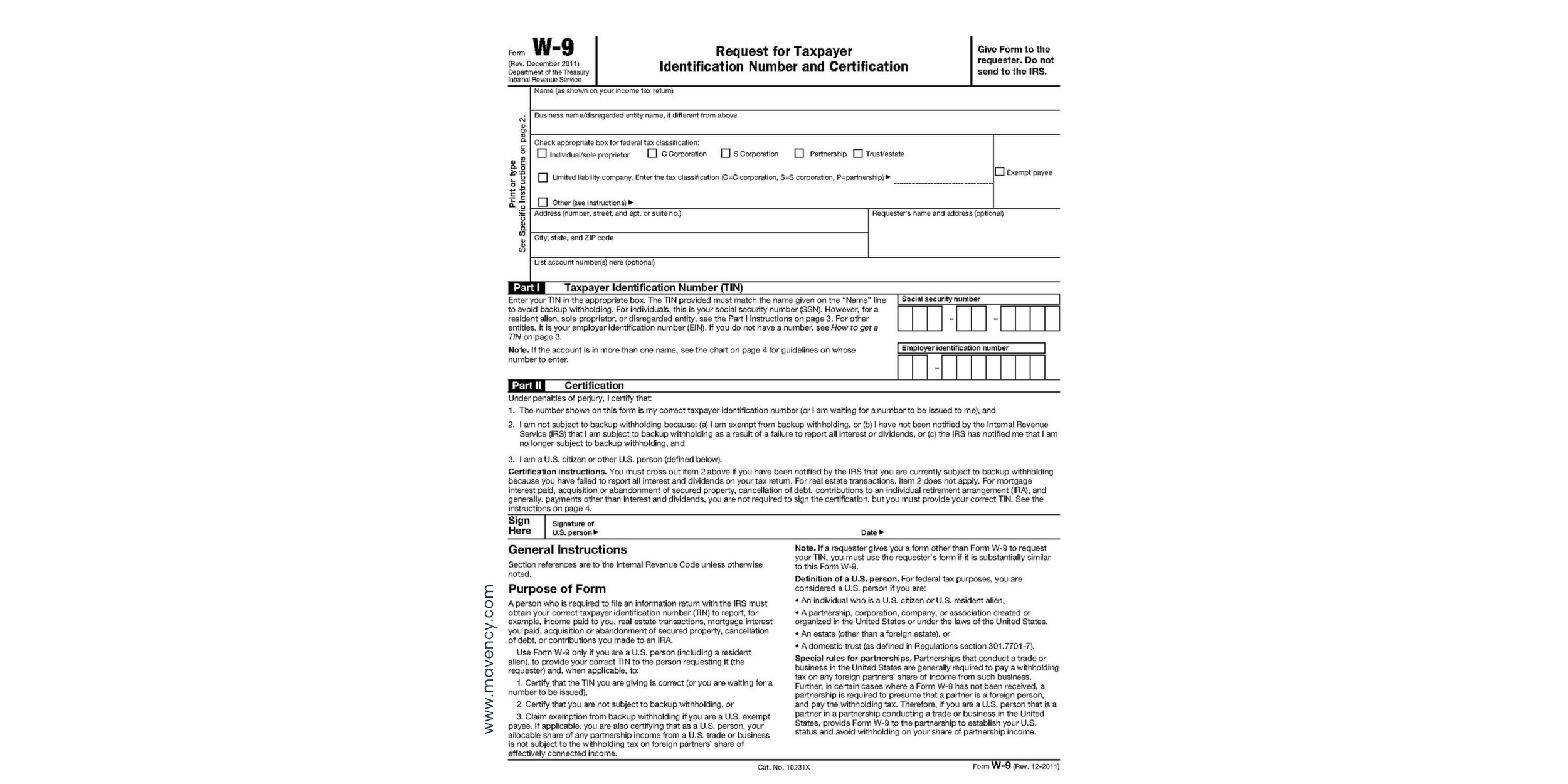
Want a shortcut? 👉 Follow this link to grab your copy of Mavency’s FREE 1099 & W-9 Checklist for E-Commerce Sellers
Let’s walk through some examples below.
Example 1: Jane Smith, DBA Designs by Jane Smith
If Jane marks that she is:
An individual or sole proprietor
A single-member LLC
A partnership or trust
An LLC taxed as a partnership
And you paid her $600 or more for services — she should receive a 1099-NEC.
Example 2: Jane Smith Corporation
If Jane’s business is one of the following types of entity;
C-Corporation
S-Corporation
LLC taxed as a C-Corp or S-Corp
Then she does not need a 1099-NEC from you.
🚨 Exception: Attorney’s always receive a Form 1099 for legal services — even if they’re incorporated. The type of legal services provided determines whether they need a Form 1099-NEC or a Form 1099-MISC. Learn more on the IRS website linked here.
Common 1099 Compliance Mistakes to avoid
At Mavency, these are the most frequent 1099 compliance issues we see from e-commerce sellers:
Including payments made via credit card or PayPal
Not collecting W-9s ahead of time
Missing attorney payments
Reporting the wrong totals due to messy books (duplicated or missing vendor payments)
Duplicate reporting between 1099-NEC and 1099-K
These mistakes don’t just cause confusion, they can trigger IRS notices and unnecessary stress.
Final Thoughts: 1099s Don’t Have to Be Complicated
For Shopify Sellers, managing your annual 1099 reporting on your own using Forms W-9 and 1099-NEC and is very do-able when your systems are set up correctly, and overwhelming when they’re not. That’s where clean bookkeeping, clear workflows, and expert guidance make all the difference. Want help with streamlining your monthly bookkeeping workflow to gain confidence in your financials and enjoy a stress-free tax time? That’s exactly what the Mavency team helps Shopify sellers and e-commerce brands do every day.
👉 Follow this link to grab your copy of Mavency’s FREE 1099 & W-9 Checklist for E-Commerce Sellers
(Perfect for staying organized before January hits.)
Need some more expert guidance? If you are ready to work with a trusted and reliable Shopify bookkeeping team, you can use this link to learn more about Mavency to see if we are a good fit for working together. For some additional support for your DIY Shopify bookkeeping, check out the free and paid resources linked below:
A2X - Sign up to use A2X for your Shopify to QuickBooks Online integration and receive 20% off your first 6 months by using our discount code: A2XMAVENCY
We hope to connect with you soon!